Table Manners

It’s a strange but universal experience, the feeling of being watched.

Despite not locking eyes with anyone, nor ever truly seeing the heads that inadvertently turn toward you, some ancient instinct within us can feel the faint electricity of each not-so-subtle glance hum through every cell of our being.

I recently went to dinner with a friend, who just happens to be 20 years my senior, at a local restaurant we inevitably end up in every time we venture beyond our doorsteps. Despite countless conversations about needing to ‘branch out’, the lure of familiarity captures our stomachs every time.

Naturally, I’d been planning what to eat all day, so as we approached the restaurant I had very little on my mind besides the three-courses that awaited me. Like most people, such extravagance isn’t something I’m used to. However, where there’s a weekend deal, there’s almost certainly a way to justify eating more than you or your bank balance can manage.

I met my friend outside and we began to catch up in all the usual ways as she took my arm and we wandered inside. It was then that my fixation on starters suddenly began to dissipate.

As we were shown to our table, I could feel the irises of fellow diners following us. I could feel myself becoming acutely aware of how every step we took, every hand gesture we made, was being interpreted in the minds of strangers.

It wasn’t a new experience for either of us. However, it’s certainly one that my friend has become far more accustomed to over the course of a lifetime than I have in the course of my year of knowing her.

It’s at this point that it’s probably worth mentioning that she was born with cerebral palsy.

As a result of the condition and certain complications, my friend doesn’t see the world with three-dimensional vision as many of the rest of us do. She also often relies on a walking stick for support.

Her differing vision means she’s a uniquely brilliant artist and in the short time we’ve spent together I’ve learned more about the limitations of our world (and the value of vibrant colours) than I could ever have hoped to.

I didn’t mention the feeling I’d had as we walked to our seats, but as the wine began to flow and our mains arrived, she began to talk about it. It’s a subject we’ve discussed before, because it happens almost everywhere she goes, but each dialogue we have always introduces a fresh perspective.

“Everyone watched because they were worried I was going to fall, but I won’t because I’m fine.”

Those were the words that touched me this time.

They reminded me of an episode of Pandora Sykes’ Doing it Right podcast with educator, fashion-admirer and advocate for disability and design, Sinéad Burke.

They also reminded me of another friend, who has a spinal injury and who I met in my final term of university.

Just as Sinéad eloquently shared powerful stories and insights with Pandora, these two friends often do the same with me.

They tell me that they don’t want to be made a fuss of, or to be paid attention to whenever they simply wish to go out for a meal, or to visit the pub.

More often than not, people rushing to their aid or opting to let them get on with it (with half an eye on them all the while) originates from that proverbial ‘good place’.

But for my friends, it’s an unnecessary reminder of their ‘lacking independence’, something that wouldn’t exist if the world was more mindful. As Sinéad posits, it’s not actually that anyone ‘lacks’ anything. Rather, it’s the world that lacks the ability to accommodate everyone. It is the world that is ‘disabling’, not that people are ‘disabled’.

For the most part, it seems to be the fear of getting it wrong, or of offending someone by asking them if they need help, that seems to hold us back. Myself included.

But it is far worse to assume that someone is or isn’t okay. My friends, at least, have told me that they’d much rather be posed with a question, because that way their agency remains.

It’s something that I’ve only just discovered and something I hope to continue learning about. There will inevitably be times when I have and will make mistakes, just as the rest of us will, but I think these are mistakes that should be meaningfully made.

Yes, when we make them, they’re likely to make us uncomfortable. However, considering plenty of people like me will have spent their whole lives being predominantly ‘comfortable’ in a world built for us, I don’t believe it’s a bad thing to be confronted with our own ignorance. Ultimately, whatever we feel fleetingly will only be a miniscule moment of comprehension regarding that which others face. Hopefully it will be one that teaches us the art of productive empathy.

There is perhaps nothing more worthwhile than questioning our own motivations and behaviours, whether in relation to this subject or a multitude of others.

Countless books and far-superior thought-pieces are dedicated to examining altruism, or even simply the idea of ‘doing the right thing’.

I suppose that simply makes this a reminder. A reminder to eternally consider what we’re doing, why we’re doing it and whether it’s ostensibly ‘right’.

I’ll try to remember that the next time my mind strays to dreams of tiramisu.
Dreaming Spires

A few mornings ago I was out running bleary-eyed at about 6:30am, having forced myself up and out of my duvet cocoon almost an hour previously.

For a long time, there was nothing I loved to do more than lie-in until lunchtime (the strange shifts I worked at my local pub probably had a lot to do with it). But answering the call of full-time employment I’ve returned to my childlike ways and am what many would longingly gawk at as a ‘morning person’.

There is something strangely satisfying about being awake before anyone else, although I realise it’s my privilege to be able to choose to do this rather than my job, or the cry of a child, or indeed both, demanding it. Nevertheless, seeing the sunrise and watching as the world slowly eases its way out of hibernation for another day seems to be the thing that encourages me to venture out into the cold.

Admittedly, the need to train for a charity 10k I’m doing this October is also a factor.

My Mum actually suggested I seek professional help when I told her of my plans back in February. That probably gives you a good idea of how inactive I was prior to this year.

I never for a minute thought I’d become one of ‘those people’ who enjoy running and physically at least I don’t feel I’m a great deal better now than when I started. If anything, I feel more battered and bruised than I did in my former life as someone in the midst of a loving, long-term relationship with Netflix.

But mentally, it really has had an impact.

I don’t mean this in the sense of wellness, or self-care, or any of those catch-all terms that we use to essentially justify anything from running, to treating ourselves to avocado on toast, to more or less anything else you can think of.

What I mean is that it’s given me the time to think.

Some days these thoughts are more profound than others. Regardless, I love having a dedicated hour (see earlier reference to shocking athletic ability) to listen to a podcast, roam around a beautiful city and simply contemplate what I’m seeing and hearing. It seems to be the only time I’m semi-alone with my brain, unconsciously following the winding ways of my mind.

It was on this one particular morning, the one I mentioned a few paragraphs ago, that I had what I considered to be one of my more percipient musings. Read into that what you will.

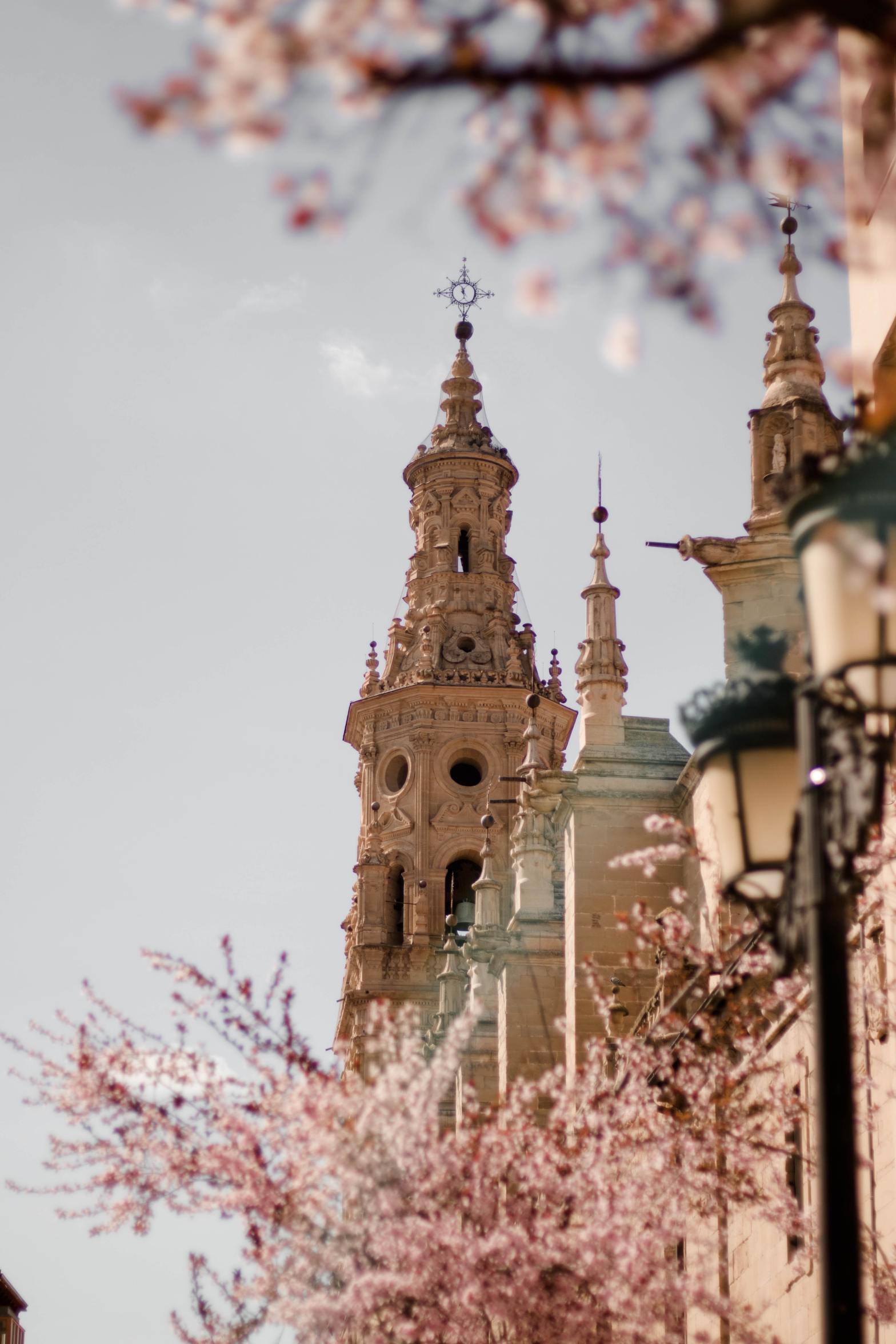
My route often takes me past the city’s cathedral, but in the soft dawn light that morning I was newly struck by its vast, extravagant beauty.

It wasn’t the architecture that I was in awe of. It was the fact that people, our ancestors, had built this staggering place at a time when technology, and perhaps even knowledge, was far from what it is now.

It prompted me consider what had driven them to rise each morning.

Was it economic? The need to make money to survive?

Was it pride? The desire to showcase quality craftsmanship?

Was it belief? The omnipresent power of religion?

Religious faith and worship undoubtedly were, and indeed remain, a crucial part of people’s lives. A wealth of reasons probably motivated the workers responsible for bringing this holy place to life. However, fundamentally the reason for it being built in the first place was because the vast majority of people saw value in it being there. They perhaps questioned the expense, were perhaps naïve in following teachings from the top, but ultimately it felt worthwhile to them.

This led me to an inevitable question.

Why do so many deserving issues and elements of our lives lack their own 123 metre spires and all they represent?

Equality, diversity, climate change, human rights. The list is endless.

It wasn’t a question I could answer. Maybe it’s a matter of those in positions of power not subscribing to the importance of overcoming these systemic problems our society has been facing for thousands of years. Equally, maybe it’s a lack of consentient belief in the issues and a similar lack of majority commitment to making positive change.

As I turned to jog up the hill to home, my thoughts too took on a new direction and I couldn’t help but dwell on one thing.

The fact is, people built that cathedral because they had faith. The form it took was at times undeniably problematic, but faith by definition isn’t intrinsically tied to religion.

Faith is having a complete trust or confidence in someone or something.

Past peoples evidently had this, or else they wouldn’t have devoted so much time to the creation of lavish edifices. Therefore, theoretically at least, there’s no reason why faith cannot be ubiquitous once again.

However, this time, one can only hope that faith serves to have a fruitful result for all. That it supports everything of significance and everyone unanimously, enabling us to stand shoulder to shoulder atop the steeple.

Positivity Pandemic

It seems only right that the first ‘content driven’ post to feature here should be about the thing that has transformed all our lives, although not necessarily beyond all recognition.

Coronavirus has undoubtedly had an impact on the way we live our lives. It has been something that has touched all of us and it has undoubtedly led to a great deal of sadness and uncertainty. Unfortunately, it also now appears that it is going to continue reigning for some years yet.

Yet, back in March, when the virus led the UK into lockdown and no one quite knew what that meant (the details, admittedly, are still a little hazy) it was striking how in the midst of such heart-breaking times, many sought solace in the heart-warming.

The piece you’ll find below, which I wrote earlier this year in April, is a small example of that. If nothing else, already it’s interesting to see how the conversation around the virus has evolved in the course of six short months.

Lola still knows it’s okay to spend more time alone, but that hasn’t stopped her hating not being at the office, or hating not being able to enjoy the capital like she used to. Martha did pursue a brilliant new opportunity, but the wanderlust lurking within her hasn’t disappeared. Elena might have liked working from home for a little while, but it wasn’t long before she was back in the thick of things and loving it. I’ve maintained my appreciation for imperfection, but since society returned to some semblance of the world we once knew, the time I spend on my appearance has undoubtedly increased.

Alice’s perspective hasn’t changed.

I love that it hasn’t.

My belief in the final line hasn’t changed either.

I love that too.

***

It’s right and understandable at times like these that we gravitate towards feelings of uncertainty, frustration and perhaps even slight despair. For many, Coronavirus represents a very real threat to lives that are cherished by many and that’s scary.

As someone who isn’t regarded as ‘vulnerable’, I can say I’m a little apprehensive. I won’t pretend to know what many people are going through, but what I do know is that for all the heartache this virus has, and will, cause, I’ve seen it bring a lot of positive things too.

I also won’t be the first to herald this as ‘the return of bygone times’. There’s almost no article out there that doesn’t make reference to the ‘Blitz spirit’. There’s almost no article out there without someone making the valid comment that there was no such thing.

And yet, some nostalgic part of us all (well, most of us) can see why the parallels are being drawn.

Rationally, we know no one was sat in their front room ‘Zooming’ with their fellow factory workers, or requesting houmous via WhatsApp back in 1942. I think it’s just that World War II is the only event within living memory that our collective consciousness can relate to. Ironically, it’s almost like the nation’s security blanket; if we can live through that relatively happily, then perhaps we can live through this too.

Happiness is one of those millennial, Gen-Z buzzwords. We’re taught and told in myriad ways how to ‘pursue happiness’, whether that’s through the latest wellness fad or through chasing wealth, education and power. There’s no denying that some of these things work and who am I to judge what makes someone happy? But, I think for some of us at least, Coronavirus has shown that happiness can be found much more simply and much closer to home.

This isn’t to say that such an experience goes for everyone. The challenges of isolation for people’s mental health and indeed physical health cannot be denied. However, for others ‘the new normal’ is in many ways relieving certain mental and physical health pressures and this is something that should be taken into account too.

I was prompted to consider it all by my friend, Alice, who posed the question in our first video group chat of the crisis, ‘What’s one positive thing you’ve learned about yourself in all this?’

Initially, the four of us were a little flummoxed when she asked, but once we started talking it was evident we’d all been subconsciously thinking about it.

We each took turns.

Lola, who spends her life being a brilliant companion to as many people as possible, discovered that she was learning it was okay to ease up and spend more time alone. Martha, who is probably one of the kindest and most thoughtful people I’ve ever known, shared that whilst she was finding it hard, it was encouraging her to pursue new (if limited) opportunities. Elena, who is hilarious, hard-working and endlessly passionate, found that she was actually really enjoying working from home. Alice, who cooks like Nigella and always knows just how to bolster everyone’s confidence when they need it most, told us that she was getting the chance to be at home more than ever and that she and her boyfriend were getting on like a house on fire.

Mine was that it had taught me to spend less time on my appearance. It’s a standing joke that if you want me to be ready for 9pm, tell me to be there by 8pm. I am, by definition, a world-class faffer.

All it took was a pandemic for me to discover that you don’t need to have a perfect face to be able to appreciate life in all its bizarre, messy, tragic, wonderful glory.

Whilst the end is still far from sight, now is as good a time as any to slow down, stand back and take stock of the little things in life. If you can, take a second to appreciate a tulip. Enjoy a walk with a loved one. Smile at your neighbour. Run powerfully.

Kindness, calm and positivity have the potential to go a long way. Much further than uncertainty, frustration and slight despair anyway.