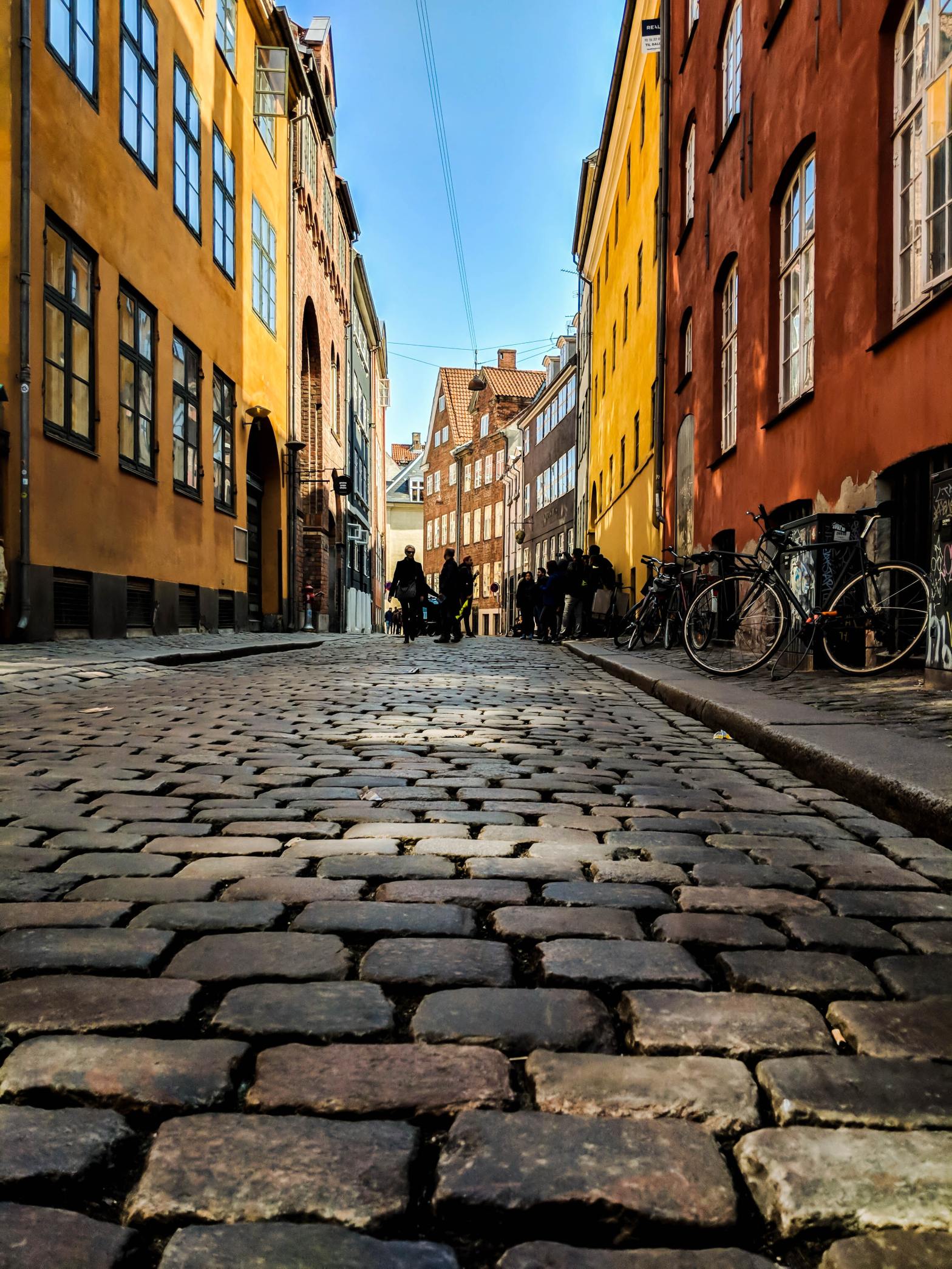
Last weekend, I am unashamed to say I spent much of my time binge-watching Emily in Paris, like most of the rest of the UK according to Netflix.
It was everything I look for in an easy-watch and I gleefully allowed one episode to melt into another, not unlike a vast camembert, to add my own shameless cliché to this delightful narrative.
I was absolutely enraptured, in the same way I was when I mindfully decided to watch Midnight in Paris a couple of weeks ago. A comparable thing happened too when I first discovered the ‘French Chill’ playlist on Spotify thanks to The High Low.
And yet, when I actually visited Paris, I don’t recall feeling enthralled at all.
Of course, I’m aware that the two American productions I’ve mentioned are portraying the city and France as a whole in an idyllic, interpreted, screen-friendly way. I also admit that I visited in January, on a university-organised holiday that was more or less everything you can imagine about such an excursion.
In short, we were ‘classic tourists’.
As such, I know that I didn’t have the opportunity to appreciate the immense history and culture of Paris in a manner befitting such a place.
It’s trips like these, amongst others, that remind me why I love going to places with no agenda, wandering seldom trodden paths to wherever they may take me. If I happen to come across something notable, wonderful. If I don’t, perfect.
I relish feeling the fabric of a place, just as much as I adore easing myself into my favourite jumpers, of which, incidentally, there are many.
It’s a sentiment that’s prompted my desire to explore more of the world alone, although Coronavirus aside, I’m not sure when that will be happening. I’ve only recently mustered the courage to visit local cafés unaccompanied and even then, it’s always with a book or laptop in hand.
That travel has become a major industry is no secret. However, it wasn’t until I saw an advert for Michael Palin’s new BBC Two documentary, Michael Palin: Travels of a Lifetime, that I had ever really stopped to truly take stock of how vast it now is.
In it, he simply shared that when he began creating his documentaries for television, he never imagined that society, or rather a specific sector of it, would be gripped by such an impulse to travel.
Bear in mind that this was only 30 years ago. Today, hodophiles seem to be lurking around every corner, whether you’re at brunch, on a dating app (don’t get me started), at the office, or, most bizarrely of all, when you’re actually already on holiday.
I’m taking a rather didactic tone for someone who’s entirely complicit in this. Perhaps it is simply that we all have hodophilic tendencies within us and now it’s simply possible for more of us to respond to the call of the wild.
None of this is to say that I don’t appreciate meaningful conversations about travel either. Finding out more about why someone chose to go to a certain place, what they discovered whilst they were there and how much it meant to them is something I’m as intrigued by as the next person.
But more often than not, we seem to just give statements of where we’ve been. It’s as though all we care about is ticking boxes. The further away the box, the worthier it is.
This is probably why I’m perpetually bothered by how many people are surprised by my love of a, for want of a less cringeworthy word, ‘staycation’. Travel now seems to carry such cultural currency that admitting this is almost the same as donning a neon sign bearing the word ‘boring’.
My family and I have never been abroad together and this shocks people. My Mum, nor my grandparents, have a passport and I’m relatively certain the emergency paperwork my Dad once rushed to Swansea to get for an impromptu work event has expired.
We have no desire to go abroad either. Of course, there are places we all talk about wanting to see, but for a week (or, if we’re feeling extravagant, two) each year we couldn’t be happier than we are simply journeying to the depths of Pembrokeshire, or meandering the dramatic Cornish coastline.
These fitful, almost-annual holidays were part of my and my sisters’ childhoods, and were something that we were lucky to experience. They’re still part of our story as adults and we plan to continue the tradition if we ever have families of our own.
Regardless of your destination, it appears that our almost eternal longing to disappear to somewhere new is often largely driven by escapism. The character of Emily herself eventually comes to the conclusion that she “ran away”, without even realising that she’d done it.
Perhaps it is true that all of us would like to escape, but I can’t help but wonder what precisely it is that we are trying to leave behind?
I can only speak for myself and from the few conversations I’ve had, as well as the handful of posts I’ve seen, but on the whole many people I know appear to live relatively pleasant lives. They just aren’t necessarily consistently ‘grammable’.
The truth is, life will, for most of us, probably remain the same irrespective of our postcode or where we’ve been, even if we’re convinced that we were born in the wrong village, town, city, county, country, or continent.
I’m 99.9% certain I would have thrived in Scandinavia, but ultimately I’d still almost certainly begin every day by eating breakfast, would spend much of my week at work and my life would consist of navigating various relationships. Just as it does now.
And yet, I still keep a list. Copenhagen and New York currently claim the two top spots, although perhaps it’s time for Paris to nudge into first place.
 Modernish